
Stay
Cave Hotels
Staying in rock-carved rooms: A cool and unforgettable experience unique to Cappadocia.
Waking up in a rock-carved room
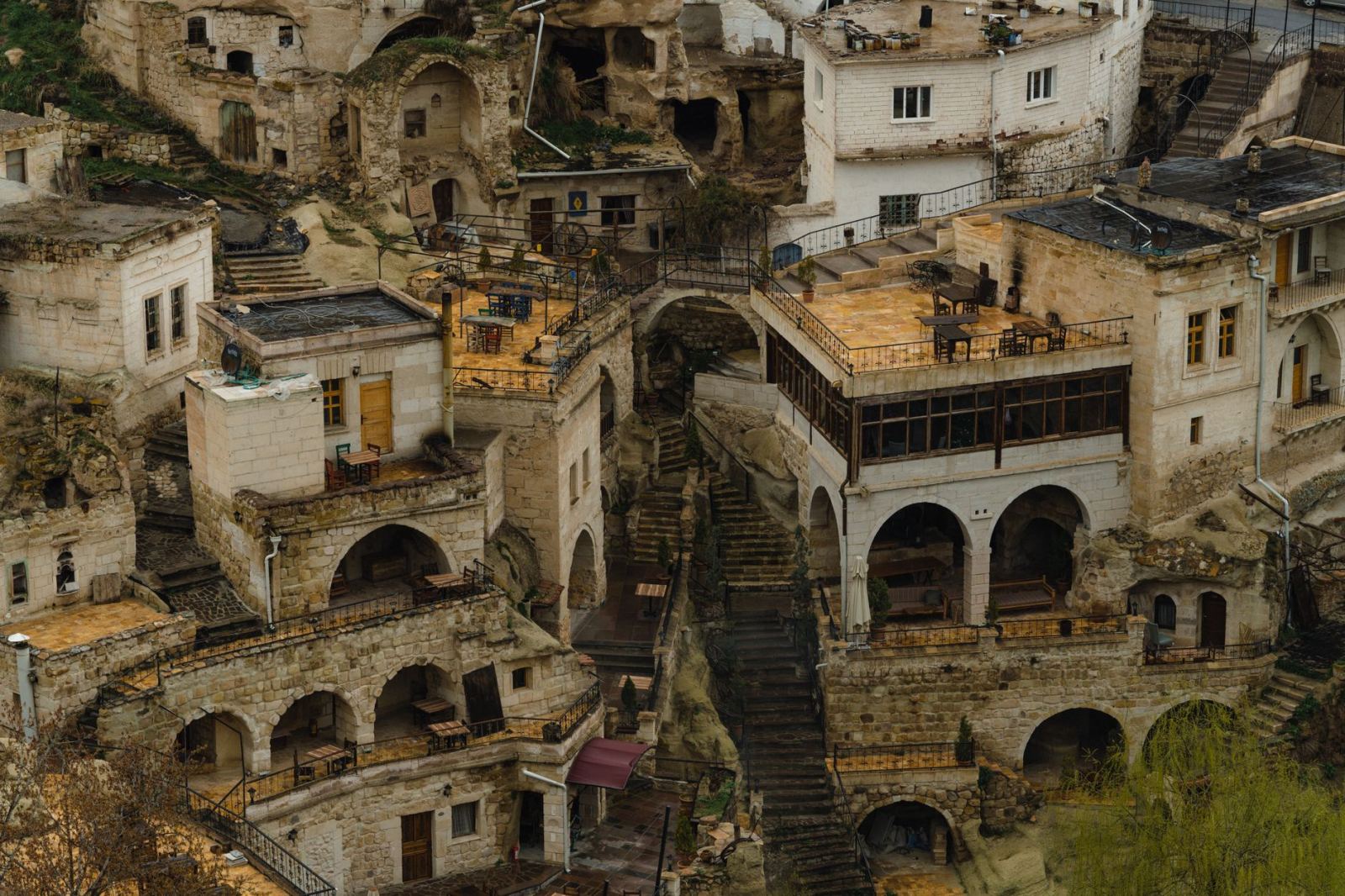
Cave hotels are the most iconic form of accommodation in Cappadocia. Rooms carved into volcanic tuff rock can stay cool in summer and warm in winter if heated correctly. Called "cave suites," rooms often feature stone-textured walls, vaulted ceilings, and sometimes a jacuzzi or private terrace. The experience is markedly different from a standard hotel room.
Not every cave hotel is the same: some have luxury boutique standards, some have a simpler hostel character. Room size, natural light, humidity control and stair access are critical details to ask about before booking. For comparison boutique hotels and where to stay See pages.
Who is it ideal for?
romantic getaway, honeymoon and perfect for travelers who want to "try it just once". Multi-storey and staircase buildings can be challenging for those with mobility restrictions; Ask for elevator or ground floor room. Those who are sensitive to claustrophobia may prefer rooms with large windows or semi-cave rooms.
Reservation checklist
- Room type: standard cave or suite?
- Landscape: valley, fairy chimney, garden?
- Heating/cooling and humidity status
- Is breakfast included, is there a terrace?
- Balloon transfer and early check-out flexibility
Comfort, moisture and realistic expectation
Humidity control and ventilation are sufficient in well-run cave rooms; Poorly managed ones may have a musty odor. Look for the words “moisture” and “odor” in the comments. In summer, natural coolness may be sufficient instead of air conditioning; Ask for additional heater in winter. Jacuzzi suites are romantic, but check the water pressure and cleanliness standard.
Suitcase wheels struggle on stone stairs; Plan for backpack or staff assistance. Railings and bed type are important for families with children. Quietness may be affected by balloon preparation noise at night; Ask for room direction.
Practical travel plan for Cave Hotels
Cave Hotels have a unique rhythm in the multi-layered geography of Cappadocia. Most visitors come to the area expecting balloons, fairy chimneys and underground cities; whereas accommodation and town base decisions take on a different stage in this grand narrative. Accommodation selection, daily distance, dining habits and crowd tolerance directly shape the Cave Hotels experience. Therefore, instead of memorizing the "must-see list", it is a more efficient strategy to adapt to the tempo of this place.
In terms of transportation, Nevşehir Kapadokya and Kayseri Erkilet airports are the main gates. Transfers are made through the hotel or by private vehicle. Intra-regional minibus lines operate on certain routes; Late in the evening, options become scarce. Car renters set flexible routes but should be prepared for narrow streets, limited parking and summer dust. A central base + day trip combination is recommended for first-timers, then branching out to quieter towns on the second visit.
In food culture testi kebab, ravioli, pot-cooked meats, flatbread and local cheeses stand out. wine tasting Urgup concentrates on the line; Tea gardens are social breaks in every settlement. Although vegetarian options are increasing, it is good to ask about the menu in advance. Water consumption is critical in summer; An electrolyte and snack plan on active days reduces fatigue. Sleeping early in the evening is often preferred to adapt to the balloon rhythm in the morning.
Cave Hotels by Season
Spring (April–June) is popular for its warm weather, blooming vineyards and high probability of balloon flights. Summer (July–August) offers long daylight hours, but midday heat makes outdoor activities difficult; It is necessary to shift the schedule morning and evening. Autumn (September–October) is a favorite of many locals with its golden colors, vine harvest and balanced temperatures. Winter can be quiet, cheap and atmospheric; However, some flights are canceled, icing increases, and short daylight compresses the plan. Whatever season you come, have a flexible plan B (museum, cave hotel enjoyment, town centre).
Handmade pottery, rugs, onyx and local food products are common in shopping. Price comparison, written shipping conditions and return policy are especially important for large purchases. Take advantage of the golden hours for photography; noon light creates harsh shadows. Drone use is restricted or requires permits in many areas; Ask about local rules. Cave hotels with stairs and narrow tunnels can be tiring for families with children; Choose your room type and activity accordingly.
Establishing a network with internal links (regions, places to visit, valleys and activities) around Cave Hotels allows you to deepen without getting bogged down on a single page. Include major landmarks on a two-day plan, quiet valleys and west-south lines on a four- to five-day plan. In this way, you read Cappadocia not just as a “balloon postcard” but as a living geography of culture and nature.
Frequently asked questions and relevant notes
The most curious topics before the visit are time, difficulty, fee and crowd. Since official tariffs and opening hours may change periodically, it is necessary to verify current information on-site or from reliable sources. During peak season (especially May and September–October), being early in the morning at popular spots makes a difference in terms of both photography and comfort. In low season, some small businesses may work short hours; Accordingly, the meal and transfer plan should be flexible.
A layered approach to clothing works in all seasons in Cappadocia: it can be cool in the morning, hot in the afternoon, and windy in the evening. A neck gaiter or thin fleece works well on balloon mornings and high vantage points. Sunglasses are also useful in dusty valleys. Having cash is still an advantage for small businesses and sudden needs; Cards are common in large hotels.
In terms of health, the most common risks are sunstroke in summer and slip-and-fall in winter. Those with chronic diseases should decide on underground tunnels, long stairs and intense activities according to their physician's advice. Travel insurance makes sense considering canceled balloon flights and activity accidents. In case of emergency, the 112 line is valid; Have the address of the hotel you are staying at ready on the phone.
Finally, traveling Cappadocia sustainably is in everyone's best interest in the long run: leave little trace, support local producers, follow conservation rules, and choose to actually look rather than just "completing a list." This approach strengthens both your memories and the region.